
“It’s in the path of rediscovering and knowing your true identity that you can be the best version of yourself.”
By Isnihaya Benumbaran
While walking the streets of Jakarta, my thoughts wandered back to Lanao del Sur, especially Marawi City. Every encounter with locals became a quiet rediscovery of my own identity. In the traces of a once-shared Indo-Malay ancestry, I found familiar features, language, and foodways. Even in my studies, I encountered surprising similarities between Tagalog and the local and tribal languages of different parts of the Philippines. Yet amid this moving discovery, one question remained: how do we preserve identity when so much of what once defined us has been reduced to ashes?
Who We Are
On the first day of classes in Jakarta, we were asked to introduce ourselves. As often happens when I mention Marawi, my Indonesian classmates responded with the same association: “Marawi siege?” But beyond the image of destruction that so often defines the city in public memory, there exists a culture, a tradition, and a cuisine shaped by centuries of living identity.
Lanao del Sur is one of the provinces of the Bangsamoro Autonomous Region in Muslim Mindanao (BARMM), with Marawi City as its capital. The province is bordered by Saguiaran to the north, Ramain to the east, Marantao to the west, and Lake Lanao to the south. The lake has long sustained the region through marine life, water resources, and hydropower. The word M’ranao combines M’, meaning “people,” and Ranao, meaning “lake,” referring to the people who live by Lake Lanao.
Culture and Tradition
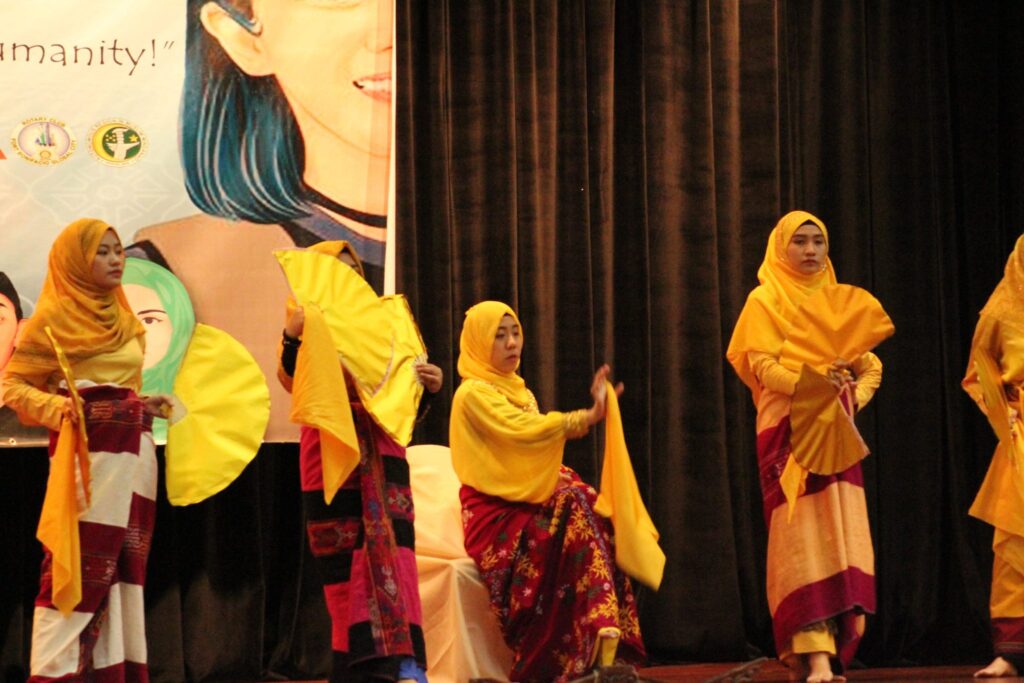
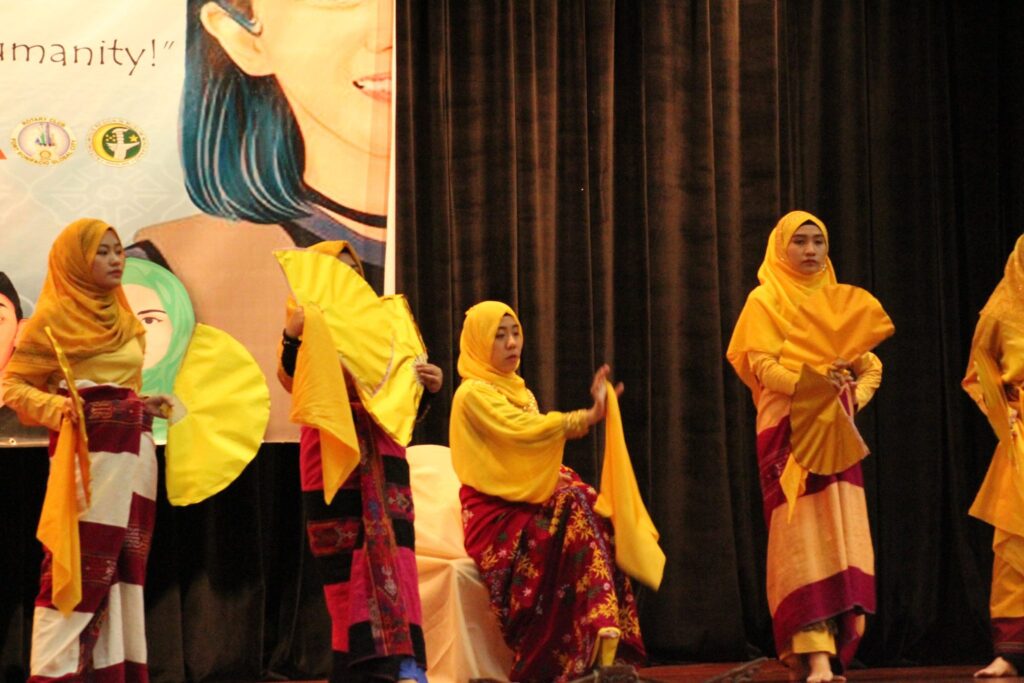
Kasayaw sa Singkil, or Singkil, is among the most recognized M’ranao folk dances and reflects an episode from the Darangen, the M’ranao epic tradition.
Okir is the M’ranao term for geometric ornamentation, reflected in carving traditions shaped by intricate forms and patterns. The word closely resembles the Indonesian ukir, which also means carving. These motifs often feature the Sarimanok or Papanok a Mra, a legendary bird commonly depicted as a rooster, and can be seen in landap, visual art, and house design.
Kulintang is a Maranao gong ensemble composed of eight gongs of varying sizes. Other traditional instruments include the biyula, which resembles a modern flute, and the kobbing, similar to the Philippine jaw harp made of bamboo. Oral tradition also lives through kambayok, a form of singing used to pass down M’ranao history and literature across generations.
Torogan is the traditional royal house of the M’ranao and a symbol of high social standing, often associated with datus and sultans. Typically built as an open interior space without partitions, it serves not only as a residence but also as a social hall for gatherings and community life.
Kakhawing often unfolds over three days, with each day marked by distinct social activities and feasting before the wedding itself. Traditional games are part of the celebration, including Kasipa sa Manggis or Kasipa sa Lama, a form of sipa played using landap, as well as Kaplagod, which many M’ranao associate with horse racing.
Among the best-known M’ranao foods is palapa, a condiment often served as an appetizer and cherished in everyday meals and gatherings. There is also mamis, a term linked to sweetness and desserts that hold an important place in weddings, housewarmings, post-childbirth feasts, and kanduwali, or mourning gatherings. In this way, food remains present across the full arc of life.
Values
M’ranao communities place deep importance on education, especially higher learning. Marawi is home to Mindanao State University, established in the 1960s and now expanded into several campuses across the country. Alongside formal schooling, many students also pursue Islamic studies on weekends, reflecting a commitment to both academic and religious formation.
Marawi is often recognized as the only “Islamic City” in the Philippines, shaped by a conservative religious and cultural life distinct from other Muslim communities in Mindanao. Visitors are welcome, and while wearing a veil is not required, modest dress is generally observed out of respect for local customs.
Katutunganaya (family orientation) and Kapapagariya (brotherhood) remain central M’ranao values. These are visible in weddings, where relatives help support family members who may struggle with the financial demands of marriage, and in times of mourning, when families are visited and accompanied in solidarity.
Marawi also holds historical significance as the zero-kilometer point of Mindanao, the original reference point for the island’s roads. Older generations remember a time when embroidered langkit designs for traditional landap were exchanged through barter with traders from many places, including America, India, China, Malaysia, and Indonesia. These memories speak to Marawi’s long history as a place of exchange, artistry, and encounter.
Above all, Marawi remains a welcoming city where M’ranaos and non-M’ranaos live side by side. For visitors, the city opens itself through hospitality, especially when approached with respect and local guidance.
Resilience
Following the destruction of a major commercial center in Lanao del Sur, along with mosques, homes, artifacts, and places deeply tied to memory and identity, the M’ranao people endured. In the days after the first fires, a local market quickly emerged along the highway in Saguiaran, restoring access to daily necessities even amid uncertainty. Despite loss and displacement, the community continued forward with determination, carrying its culture not only in what was built, but in what refused to disappear.
We are still here, and we remain hopeful for the future.